Industry

FoodTech, B2B SaaS

Client

ItsaCheckmate
EveryWare - A Centralized Menu Management Platform

EveryWare - A Centralized Menu Management Platform

The Single Source of Truth

The Single Source of Truth

EveryWare is a comprehensive enterprise platform built to streamline and scale menu and catalog management for multi-location restaurant brands.

Designed for businesses operating 5+ locations across 10+ digital channels, EveryWare provides a single command center for menus, pricing, availability, and promotions across first-party and third-party ordering platforms.

EveryWare is a comprehensive enterprise platform built to streamline and scale menu and catalog management for multi-location restaurant brands.

Designed for businesses operating 5+ locations across 10+ digital channels, EveryWare provides a single command center for menus, pricing, availability, and promotions across first-party and third-party ordering platforms.

ROLE

Lead Designer

Lead Designer

RESPONSIBILITIES

End-to-end UX/UI design process

End-to-end UX/UI design process

COLLABORATORS

1 UX/UI Designer
2 Product Managers
4 Engineers
1 Stakeholder

1 UX/UI Designer
2 Product Managers
4 Engineers
1 Stakeholder

TIMELINE

2023

2023

Understanding the problem

Streamlining Complexity
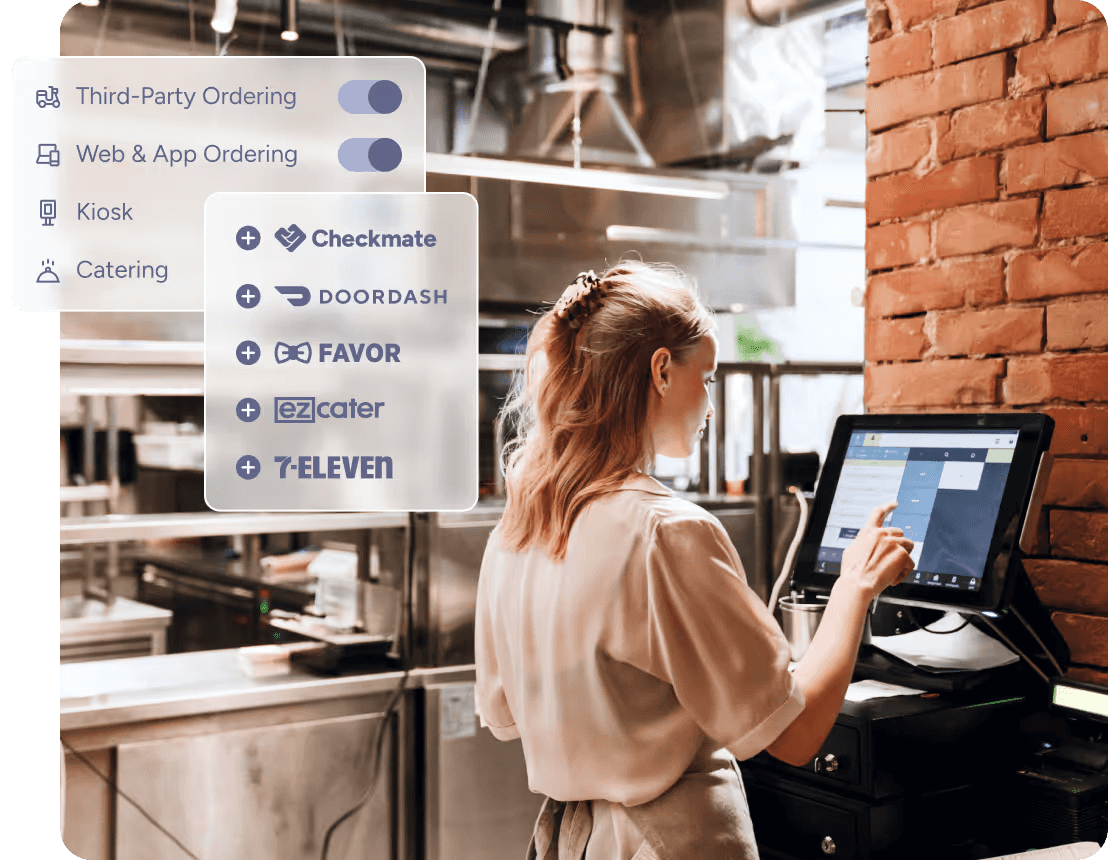
The existing system required managing menus at the individual location level, creating silos that limited operational scalability and created operational bottlenecks. For enterprise restaurant brands, this meant growth was constrained not by customer demand but by the inefficiency of their menu systems.


The existing system required managing menus at the individual location level, creating silos that limited operational scalability and created operational bottlenecks. For enterprise restaurant brands, this meant growth was constrained not by customer demand but by the inefficiency of their menu systems.


Research & Insights

Bridging the Operational Gap

I began with stakeholder interviews and process mapping to understand how restaurants actually managed their menus day-to-day. The goal wasn't just to document pain points, it was to understand the mental model of the people doing this work, and where the system was fighting against them.

The research surfaced several overarching themes:

I began with stakeholder interviews and process mapping to understand how restaurants actually managed their menus day-to-day. The goal wasn't just to document pain points, it was to understand the mental model of the people doing this work, and where the system was fighting against them.

The research surfaced several overarching themes:

01

Centralization is critical

Users need a unified source of truth

02

Flexibility Matters

While central control is essential, location-specific customization can't be lost

03

Real-time responsiveness

Restaurants can't wait hours or days for pricing/availability syncs, especially during peak hours or inventory changes

How do we give brands top-down control without stripping locations of the flexibility they need to operate?

How do we give brands top-down control without stripping locations of the flexibility they need to operate?

Goals

Each pain point uncovered in research became a design opportunity transforming fragmented, manual, and reactive workflows into a unified, strategic, and real-time experience.

Each pain point uncovered in research became a design opportunity transforming fragmented, manual, and reactive workflows into a unified, strategic, and real-time experience.

Fragmented

Fragmented

Unified

Unified

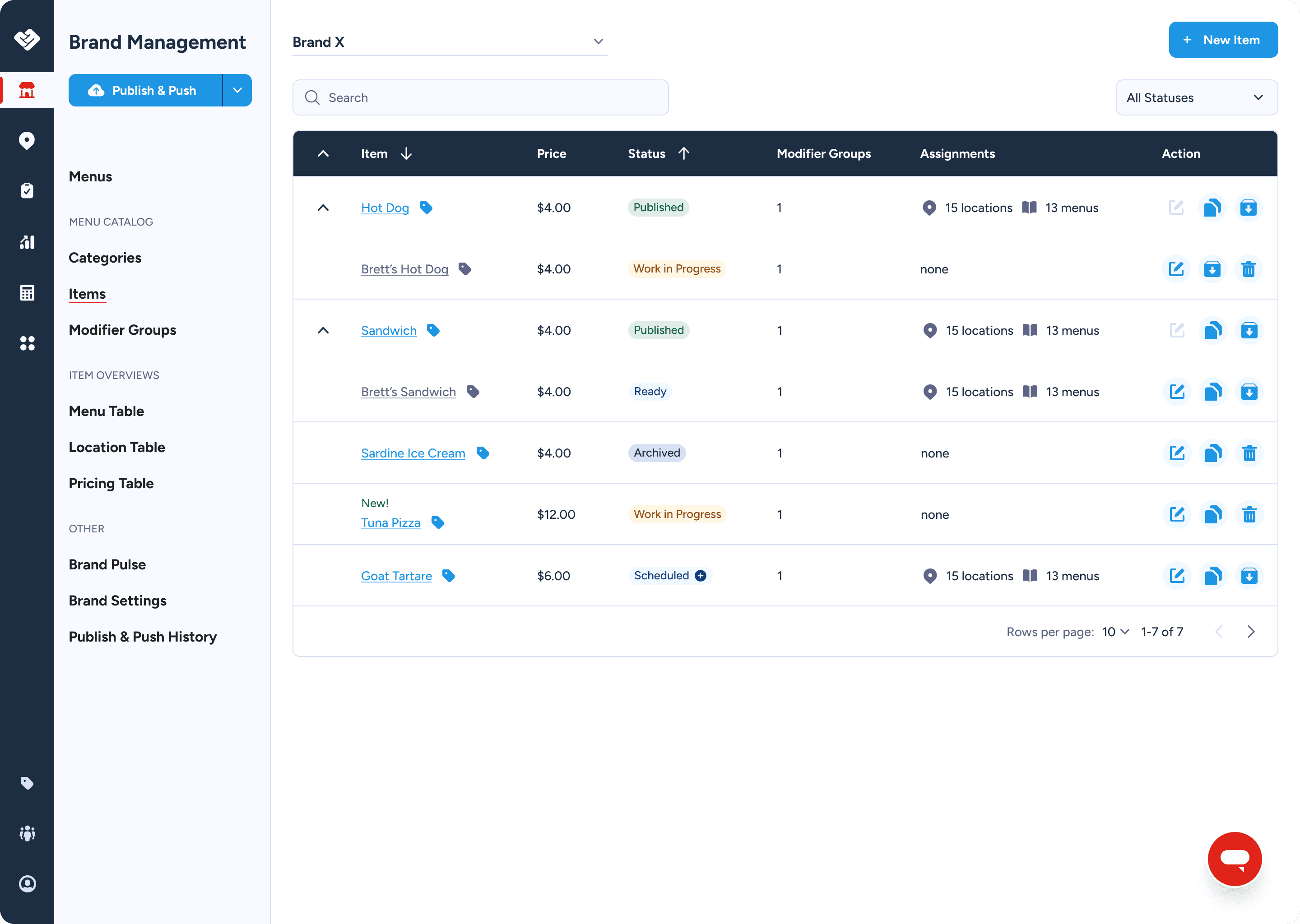
Instead of having different prices on different apps, the new solution brings all channels and locations into one platform.

Instead of having different prices on different apps, the new solution brings all channels and locations into one platform.

Lagging

Lagging

Real-Time

Real-Time

Real-time inventory syncing helps eliminate items showing as available even when they are not.

Real-time inventory syncing helps eliminate items showing as available even when they are not.

Manual

Manual

Strategic

Strategic

Before, staffs had to manually update 5+ platforms daily. By creating channel-specific customization, they save time and have more control.

Before, staffs had to manually update 5+ platforms daily. By creating channel-specific customization, they save time and have more control.

Reactive

Reactive

Scheduled

Scheduled

Invalid orders are replaced with automatic scheduling.


Invalid orders are replaced with automatic scheduling.

Challenges

Designing Within Constraints

Two problems stood out as the hardest to solve, not because they were visually complex, but because they required deeply understanding system constraints before any design could happen.

Two problems stood out as the hardest to solve, not because they were visually complex, but because they required deeply understanding system constraints before any design could happen.

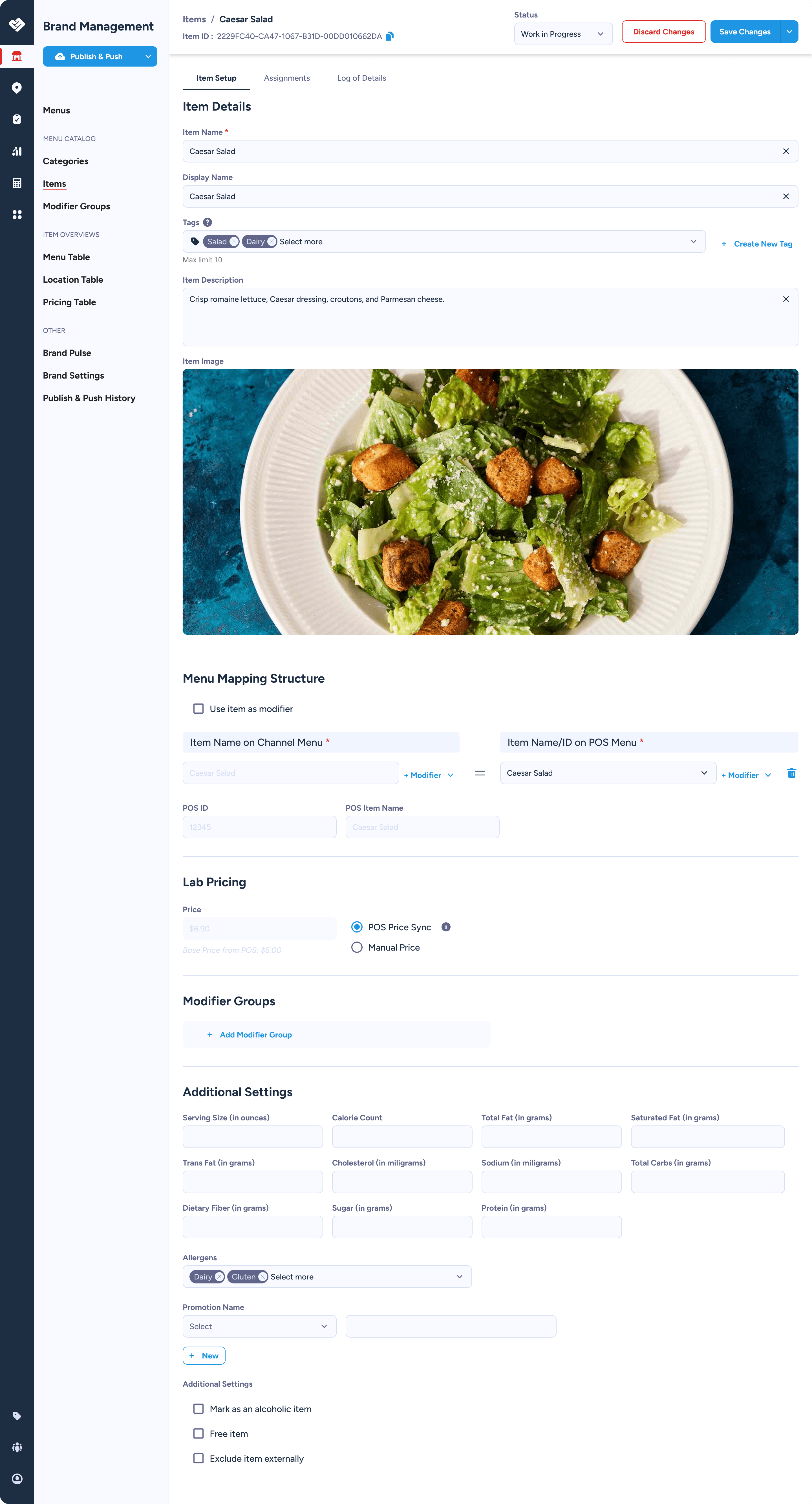
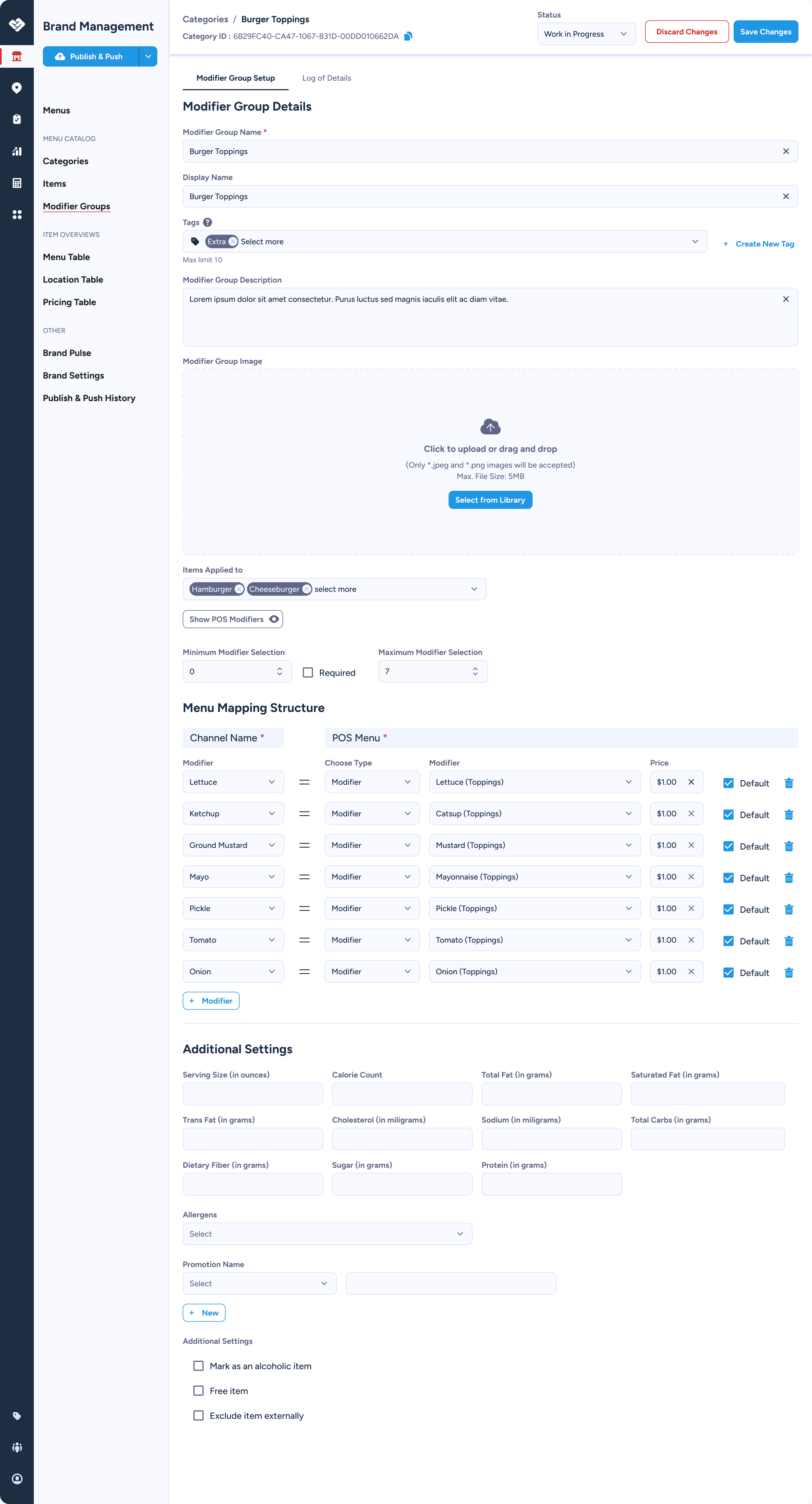
Menu Mapping Without Breaking the POS

Every item in EveryWare had to match exactly what was entered in the restaurant's POS system, down to naming conventions. A mismatch would throw an error.

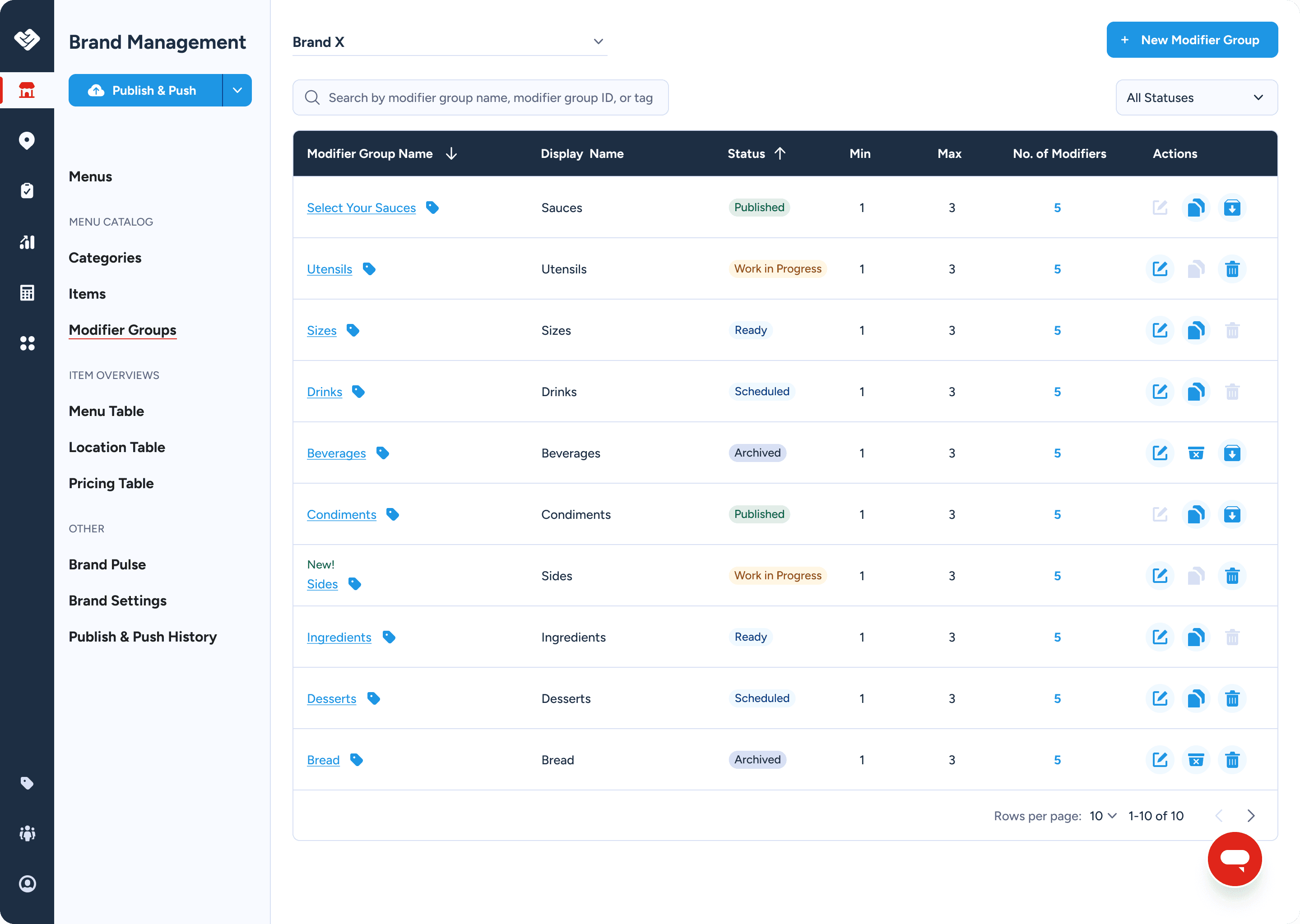
The solution was a structured menu mapping interface that surfaced POS items as the source of truth, letting users map their EveryWare modifiers to the correct POS entries with clear visual feedback before anything was published.

Every item in EveryWare had to match exactly what was entered in the restaurant's POS system, down to naming conventions. A mismatch would throw an error.

The solution was a structured menu mapping interface that surfaced POS items as the source of truth, letting users map their EveryWare modifiers to the correct POS entries with clear visual feedback before anything was published.

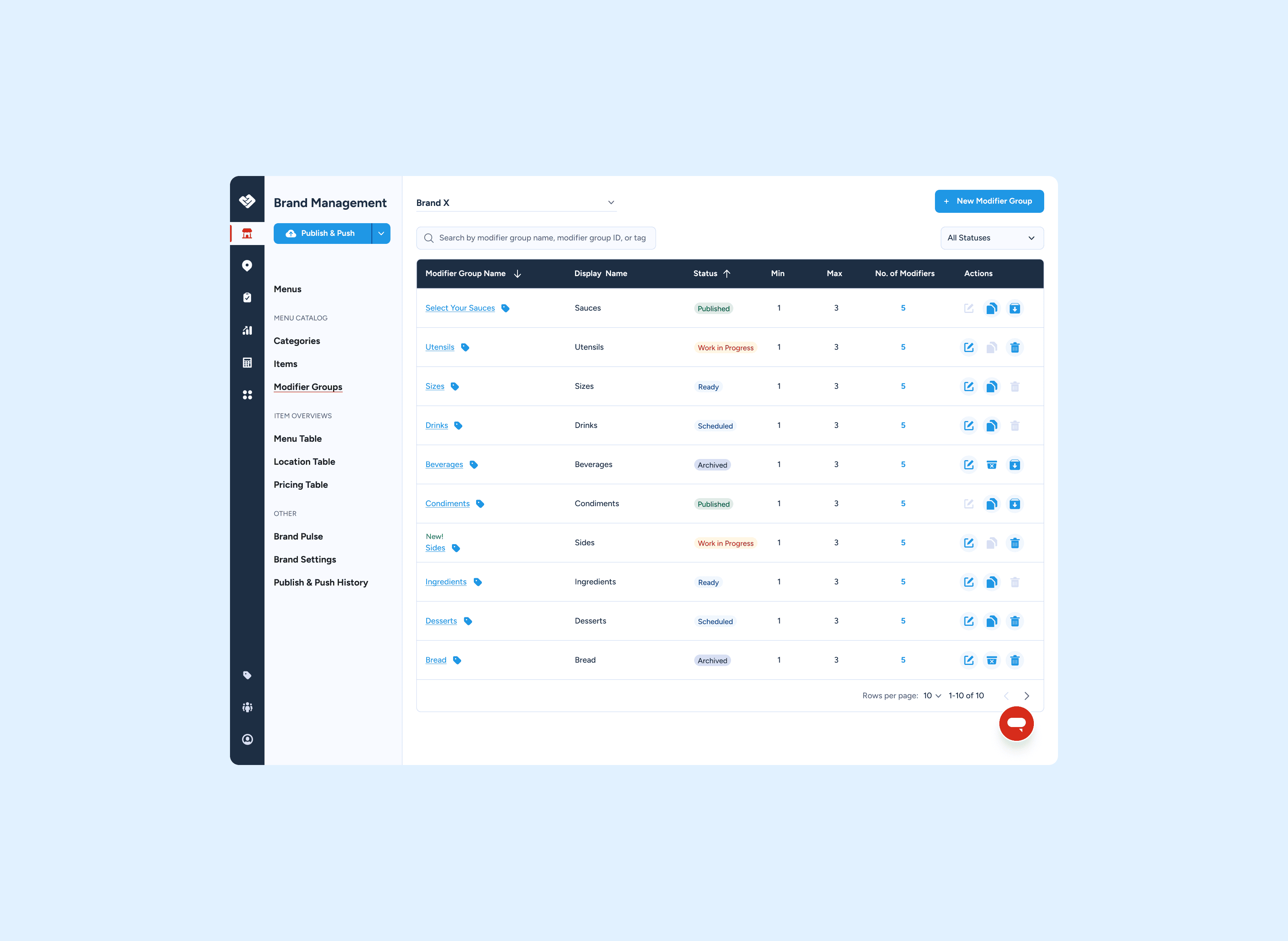
Defining a Status System that Made Sense

Menu items could exist in many states. Getting this wrong would cause real operational problems: items published too early, or live items accidentally taken down. Working with PMs, we mapped statuses to how users actually think about a menu lifecycle,.

Menu items could exist in many states. Getting this wrong would cause real operational problems: items published too early, or live items accidentally taken down. Working with PMs, we mapped statuses to how users actually think about a menu lifecycle,.

Solving the Problem

A Unified Command Center
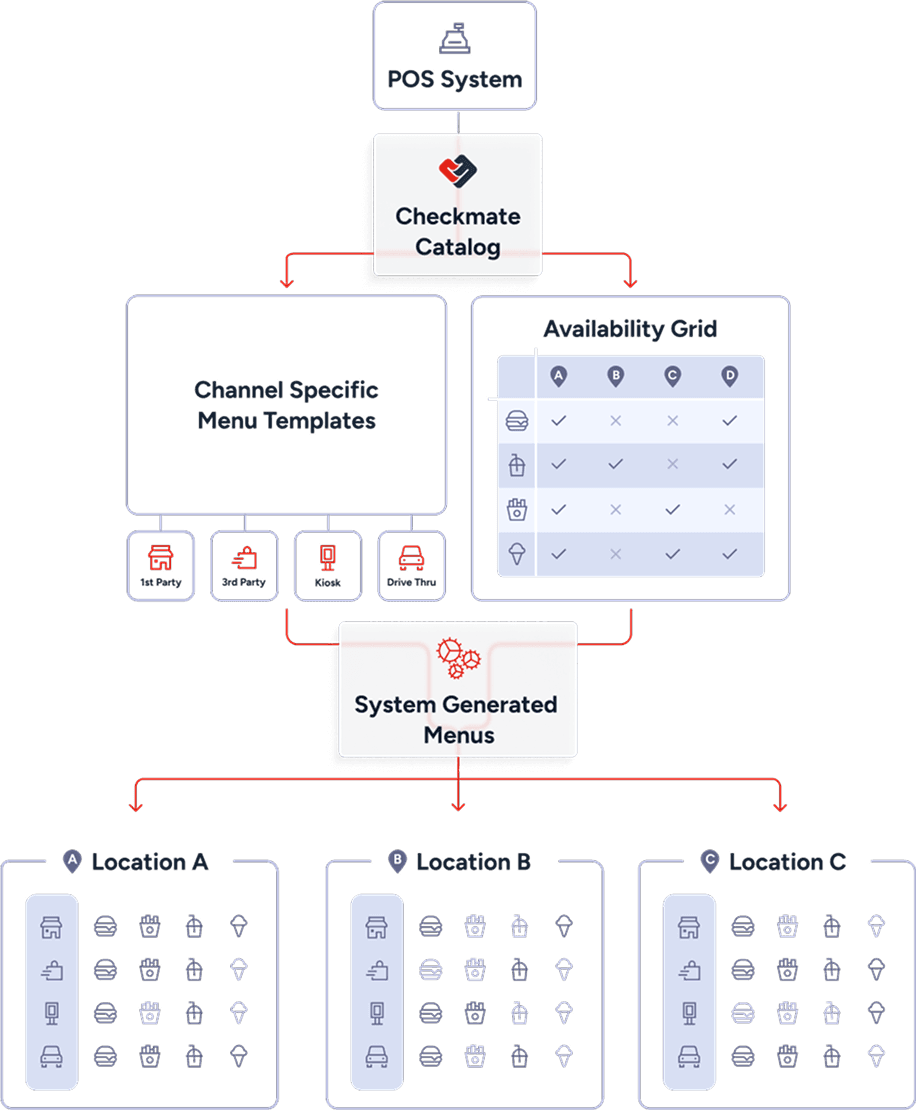
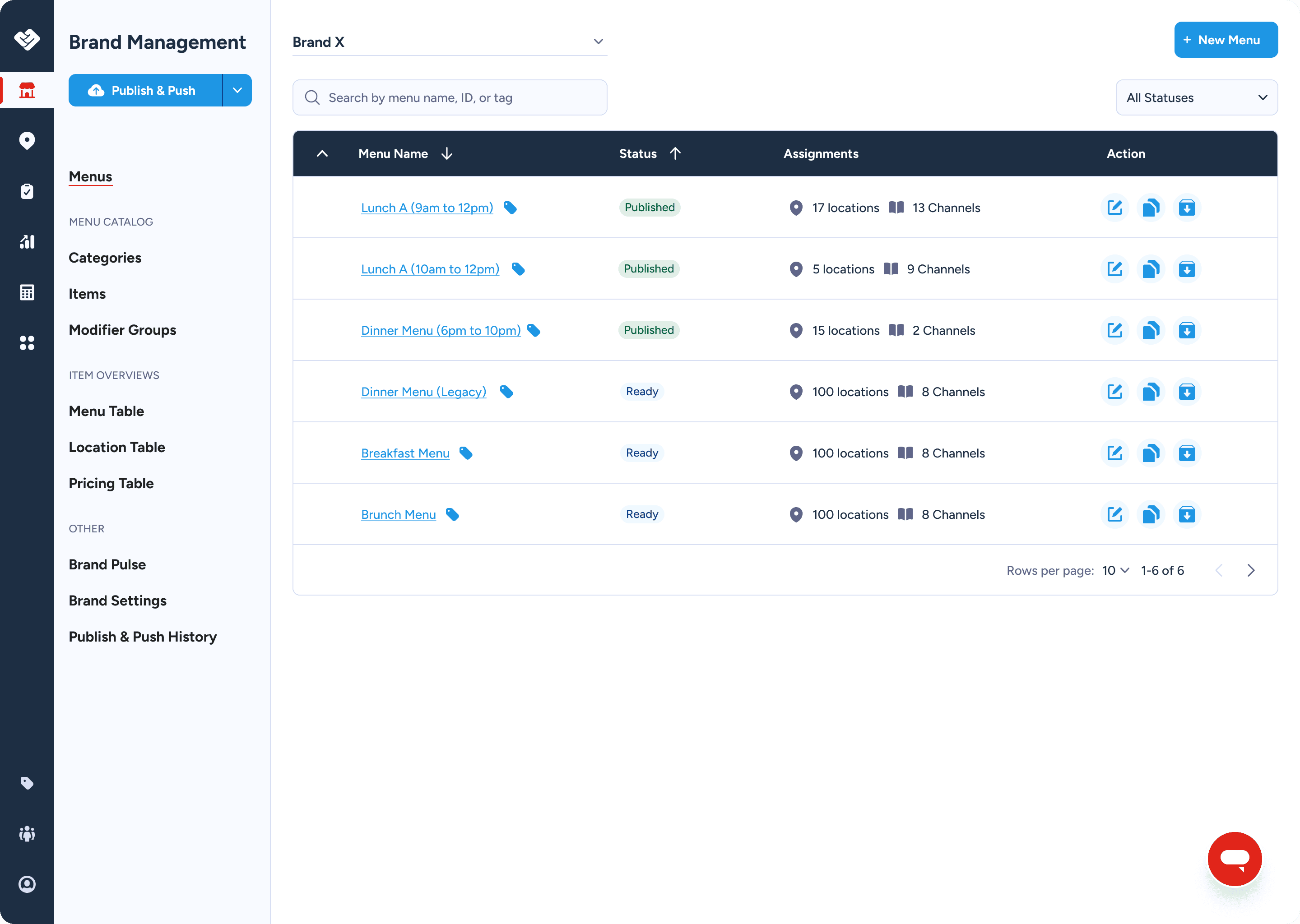
Rather than managing menus location by location, restaurant brands now have a single command center to manage everything from one place.

The architecture flows from a central catalog, pulled from the POS, through channel-specific menu templates (1st party, 3rd party, kiosk, and drive-thru), combined with an availability grid that controls which items are live at which locations. From there, the system auto-generates the right menus for each location, with location-level overrides preserved where needed.

The platform enables restaurants to:

  • Manage menus across channels and locations from a single dashboard

  • Create and schedule menu availability and pricing in real time

  • Customize menus by channel and location

Rather than managing menus location by location, restaurant brands now have a single command center to manage everything from one place.

The architecture flows from a central catalog, pulled from the POS, through channel-specific menu templates (1st party, 3rd party, kiosk, and drive-thru), combined with an availability grid that controls which items are live at which locations. From there, the system auto-generates the right menus for each location, with location-level overrides preserved where needed.

The platform enables restaurants to:

  • Manage menus across channels and locations from a single dashboard

  • Create and schedule menu availability and pricing in real time

  • Customize menus by channel and location

Rather than managing menus location by location, restaurant brands now have a single command center to manage everything from one place.

The architecture flows from a central catalog, pulled from the POS, through channel-specific menu templates (1st party, 3rd party, kiosk, and drive-thru), combined with an availability grid that controls which items are live at which locations. From there, the system auto-generates the right menus for each location, with location-level overrides preserved where needed.

The platform enables restaurants to:

  • Manage menus across channels and locations from a single dashboard

  • Create and schedule menu availability and pricing in real time

  • Customize menus by channel and location

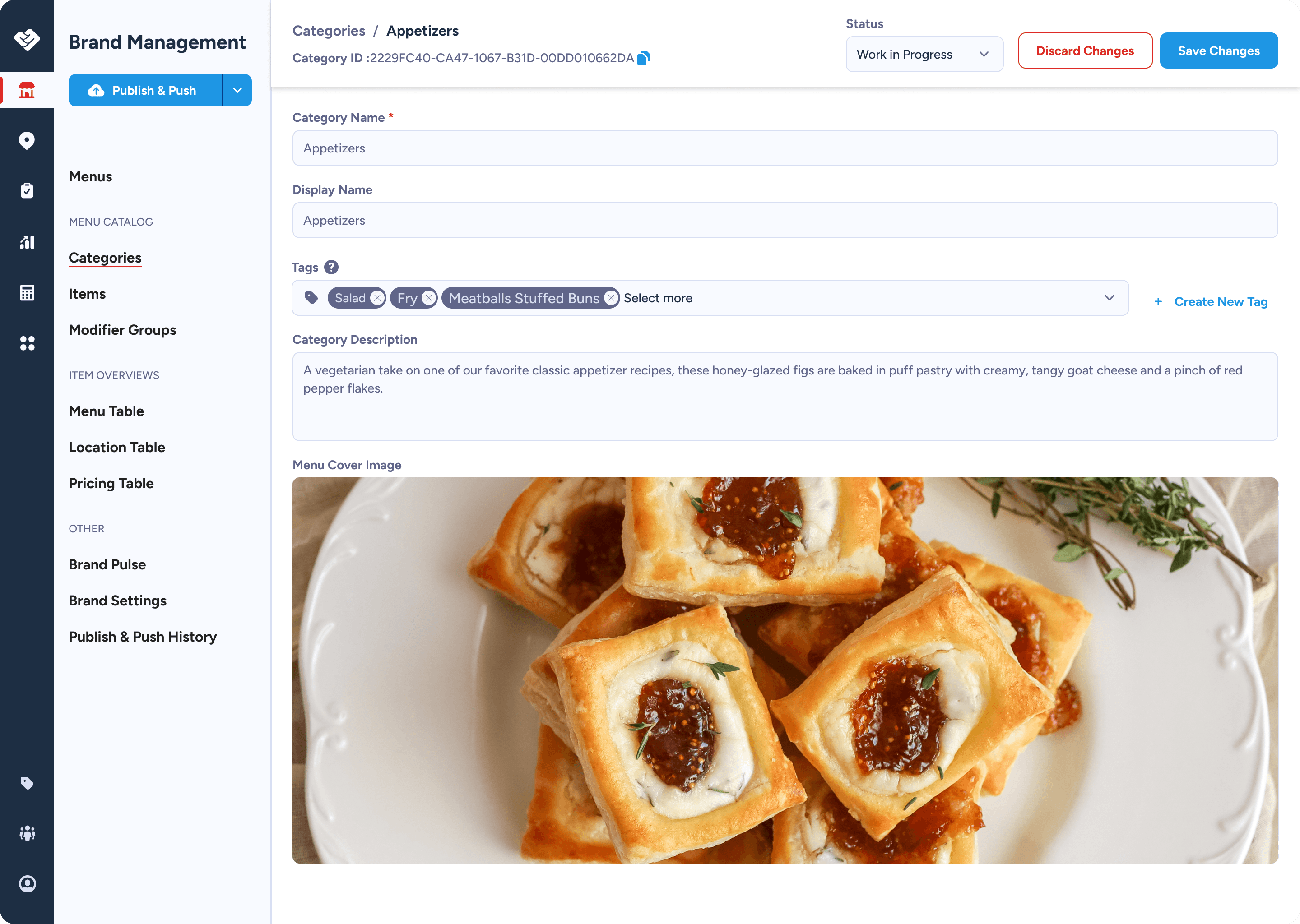
A Comprehensive Catalog System

We structured a higher level catalog layer that exists independently from the POS.

We structured a higher level catalog layer that exists independently from the POS.

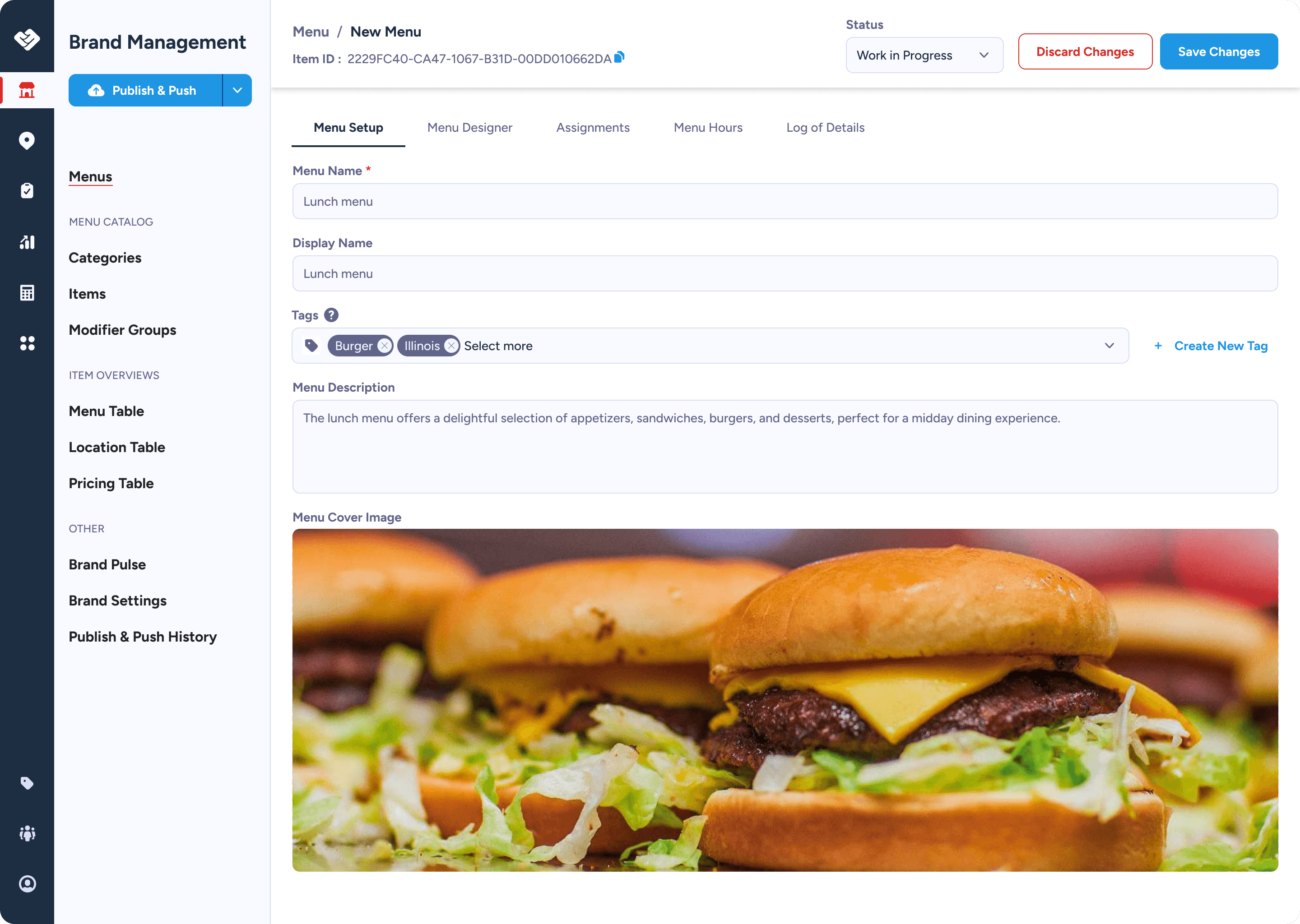
Menu Designer

Customizable menu templates that enable both consistency and flexibility. Brands can apply global defaults but override specific elements for distinct channels or locations.

Customizable menu templates that enable both consistency and flexibility. Brands can apply global defaults but override specific elements for distinct channels or locations.

Customize Menus by Channel and Location

Core POS configurations remain unaltered.

Core POS configurations remain unaltered.

Real-Time Scheduling and Automation
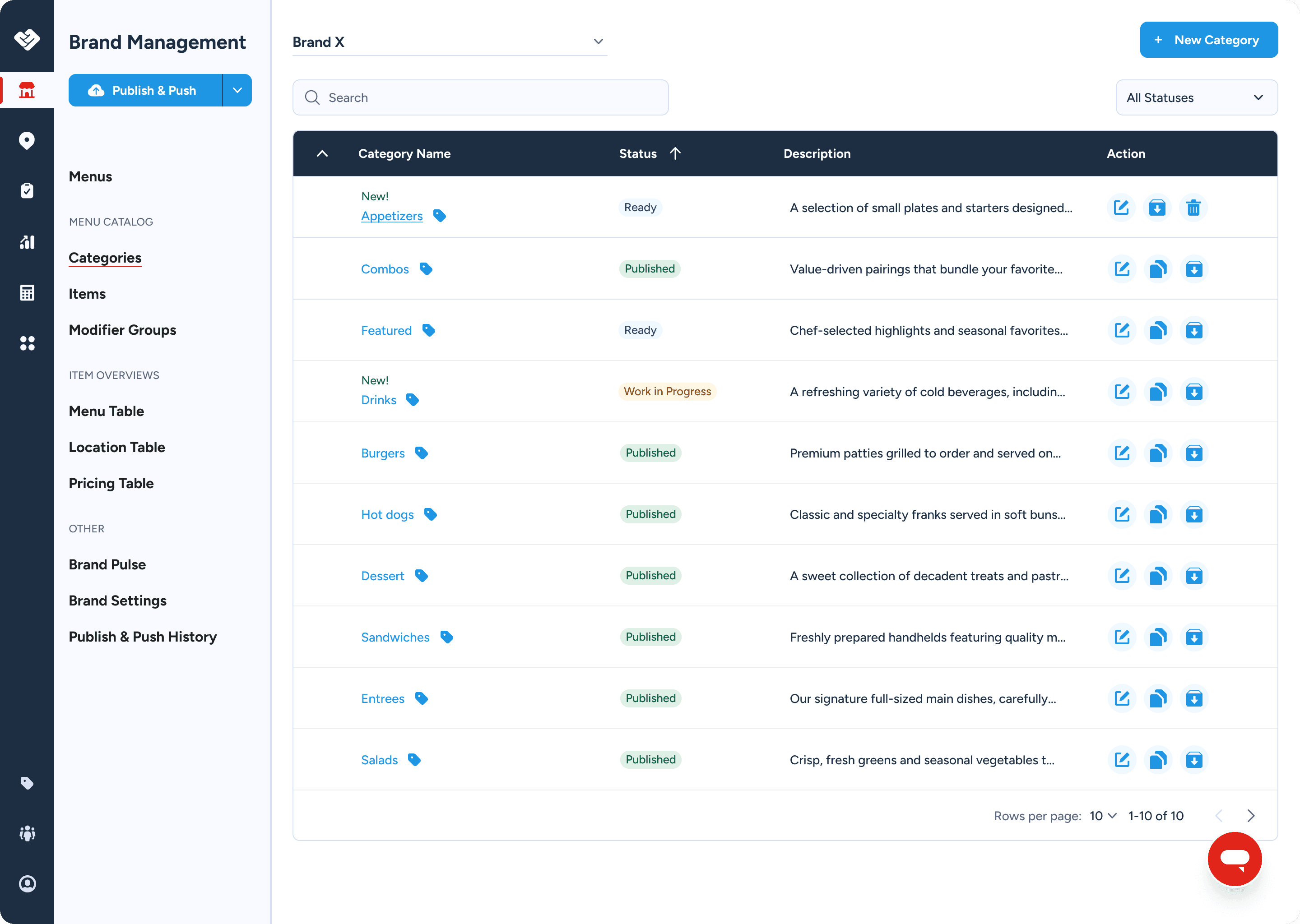
Allow future-dated changes to roll out automatically across all connected digital channels, removing the need for repetitive manual intervention.

Allow future-dated changes to roll out automatically across all connected digital channels, removing the need for repetitive manual intervention.

Impact

EveryWare launched in early 2025 and was first rolled out to a restaurant brand with 100+ locations. Early reception has been positive, and the next phase is converting all other enterprise restaurants on the Checkmate platform.

Reflections

What I Learned from this Project

Alignment across teams is a design skill

Getting PMs, engineers, and stakeholders to agree on constraints early is just as important as the design itself.

Constraints are the design, not obstacles to it

Understanding the POS mapping was what made the difference between a UI that looked right and one that actually worked.

Simplicity at scale requires deep system thinking

Managing menus across hundreds of channels and locations meant understanding the full system before touching the UI.

Real-world complexity demands real user empathy

Users managing 100+ locations don't have time for errors. Designing for their workflows meant staying close to how they actually think.