Industry

MedTech, Surgical Simulation, B2B SaaS

Client

Applied Medical
Pioneering Video Tools for Medical Residents

Pioneering Video Tools for Medical Residents

Redesigning Surgical Education for a Virtual World

Redesigning Surgical Education for a Virtual World

Applied Medical doesn't just manufacture laparoscopic surgical trainers — they support the entire learning journey around them. Simsei is the digital layer of that experience: a web portal where surgical residents complete coursework, practice techniques, and get assessed by faculty, all tied to their hands-on work with the physical trainer.

When COVID-19 hit, a future-pipeline feature suddenly became urgent: a way for residents to record their surgical technique and submit it remotely for faculty assessment. I designed the full video assessment experience.

The work contributed to a patent and I was named as an inventor.

Applied Medical doesn't just manufacture laparoscopic surgical trainers — they support the entire learning journey around them. Simsei is the digital layer of that experience: a web portal where surgical residents complete coursework, practice techniques, and get assessed by faculty, all tied to their hands-on work with the physical trainer.

When COVID-19 hit, a future-pipeline feature suddenly became urgent: a way for residents to record their surgical technique and submit it remotely for faculty assessment. I designed the full video assessment experience.

The work contributed to a patent and I was named as an inventor.

ROLE

Solo Designer

Solo Designer

RESPONSIBILITIES

0→1 video feature

0→1 video feature

Dashboard redesign

Dashboard redesign

COLLABORATORS

1 Product Manager
3 Engineers
1 Stakeholder

1 Product Manager
3 Engineers
1 Stakeholder

TIMELINE

2021

2021

Understanding the problem

When Surgery Can't Wait, But Neither Can a Pandemic
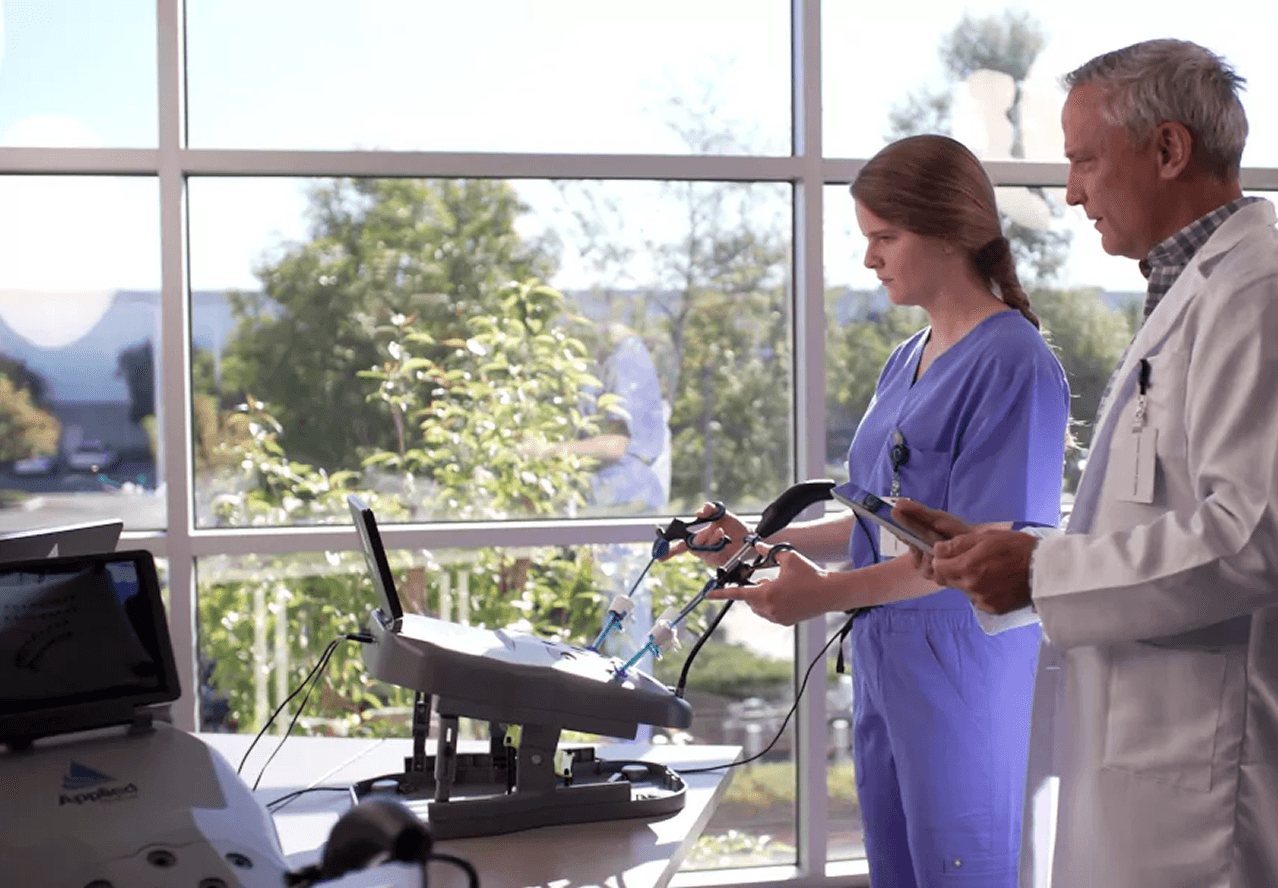
Before the video assessment feature existed, resident evaluations were done in person, in a simulation lab at the hospital. A faculty member or peer would stand beside the resident, watching them operate the laparoscopic trainer in real time. The reviewer would grade their ergonomics — how they handled the instrument, their technique, their flow — using a structured rubric on an iPad. Residents got their score immediately and could receive direct feedback on the spot.

It worked. But it had one fundamental flaw: both people had to be in the same room at the same time.


Before the video assessment feature existed, resident evaluations were done in person, in a simulation lab at the hospital. A faculty member or peer would stand beside the resident, watching them operate the laparoscopic trainer in real time. The reviewer would grade their ergonomics — how they handled the instrument, their technique, their flow — using a structured rubric on an iPad. Residents got their score immediately and could receive direct feedback on the spot.

It worked. But it had one fundamental flaw: both people had to be in the same room at the same time.


When COVID-19 cut off residents' access to hospitals, that model collapsed overnight. Suddenly, a feature that had been sitting in the future pipeline became an urgent necessity.

When COVID-19 cut off residents' access to hospitals, that model collapsed overnight. Suddenly, a feature that had been sitting in the future pipeline became an urgent necessity.

Research & Insights

Video Assessments in Surgical Training
With no direct user access, we grounded our research in 2 areas:

Literature review. We reviewed medical education journals to understand what evidence-based video assessment looked like in surgical training. The findings reinforced our direction: video-based coaching targets intra-operative judgment and technique in ways that in-person observation sometimes misses.

With no direct user access, we grounded our research in 2 areas:

Literature review. We reviewed medical education journals to understand what evidence-based video assessment looked like in surgical training. The findings reinforced our direction: video-based coaching targets intra-operative judgment and technique in ways that in-person observation sometimes misses.

Video reviewers actually scored resident performance higher than in-person observers — suggesting video removes some of the performance anxiety of direct observation.

Video reviewers actually scored resident performance higher than in-person observers — suggesting video removes some of the performance anxiety of direct observation.

Annals of Surgery, 2012

Annals of Surgery, 2012

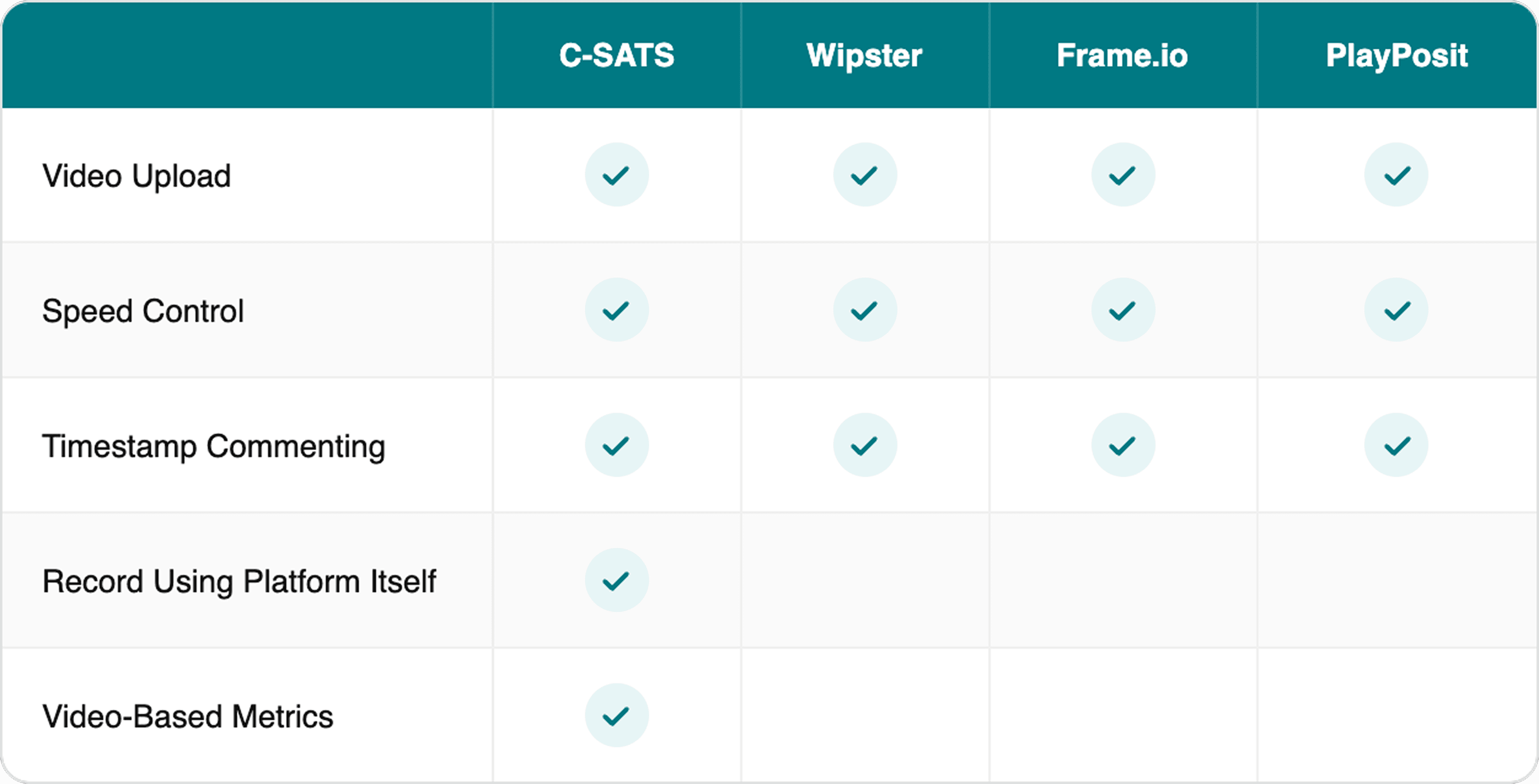
Competitive analysis. Top-tier platforms uniformly supported video upload, timestamped commenting, and variable playback speed. C-SATS, which was purpose-built for surgical video review, was the only one that also supported recording within the platform itself and video-based metrics. That set our benchmark.

Competitive analysis. Top-tier platforms uniformly supported video upload, timestamped commenting, and variable playback speed. C-SATS, which was purpose-built for surgical video review, was the only one that also supported recording within the platform itself and video-based metrics. That set our benchmark.

Goals

The project had 2 distinct goals — one for each side of the experience.

The project had 2 distinct goals — one for each side of the experience.

RESIDENTS

Record & submit on their own time

Practice remotely and submit videos for assessment without needing a faculty member present.

FACULTY

Review & assess on a flexible schedule

Evaluate resident performance asynchronously, fitting reviews into their schedule without blocking lab hours.

Scoping the work

Defining the Problem Space — More Questions Than Answers

With our goals defined, we mapped out everything we didn't yet know. The questions were deceptively complex:

With our goals defined, we mapped out everything we didn't yet know. The questions were deceptively complex:

With our goals defined, we mapped out everything we didn't yet know. The questions were deceptively complex:

Recording

How do we capture both the laparoscopic view and the resident's hands simultaneously?

Will residents record using the Simsei scope, a webcam, or third-party software?

How will this work with the current trainer and the next-gen trainer in development?

Storage and IA

Where does video data live — CDN, cloud, or database?

Where does the video library live in the existing information architecture?

Who has access to uploaded videos — residents, or faculty too?

Assessment

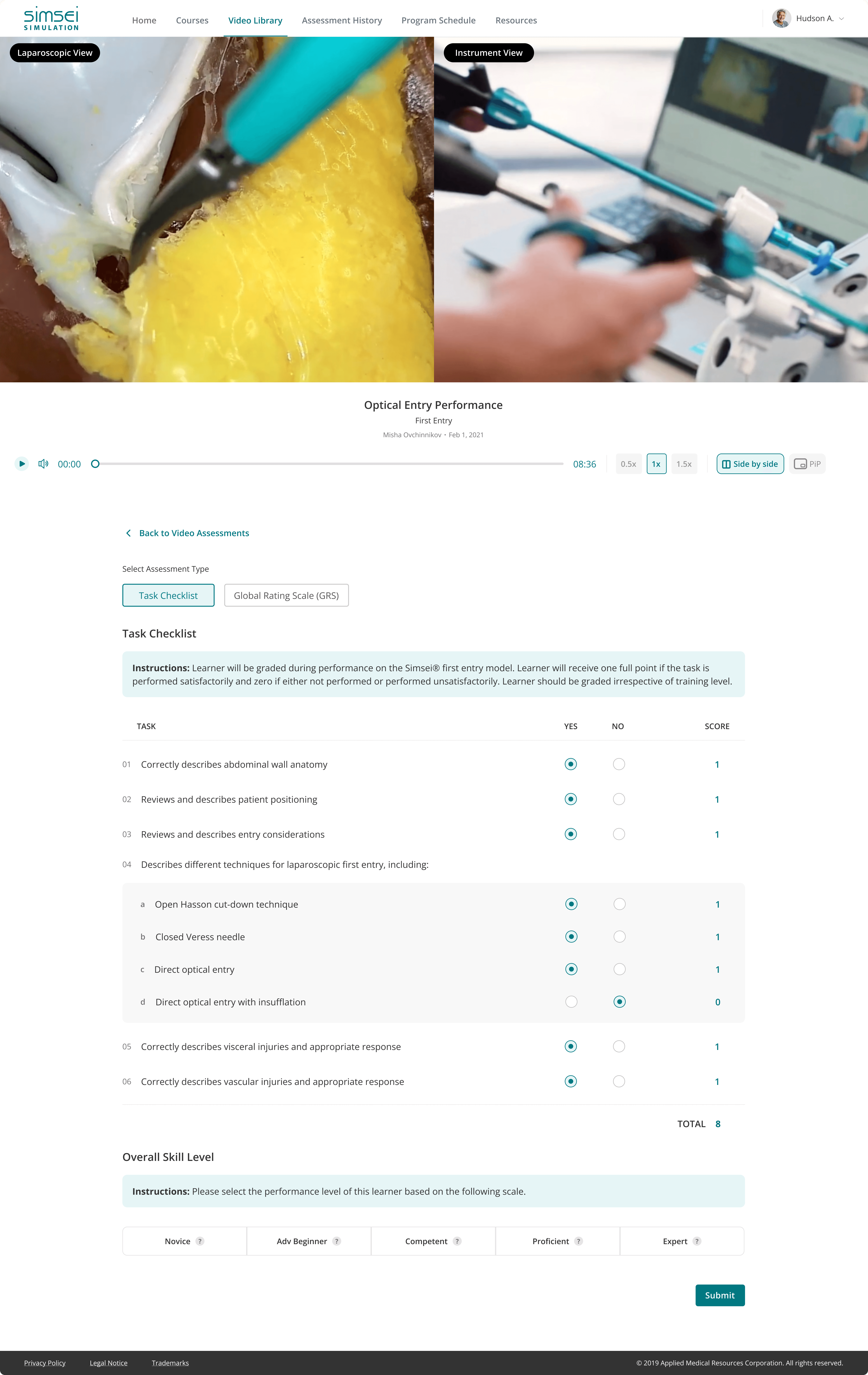
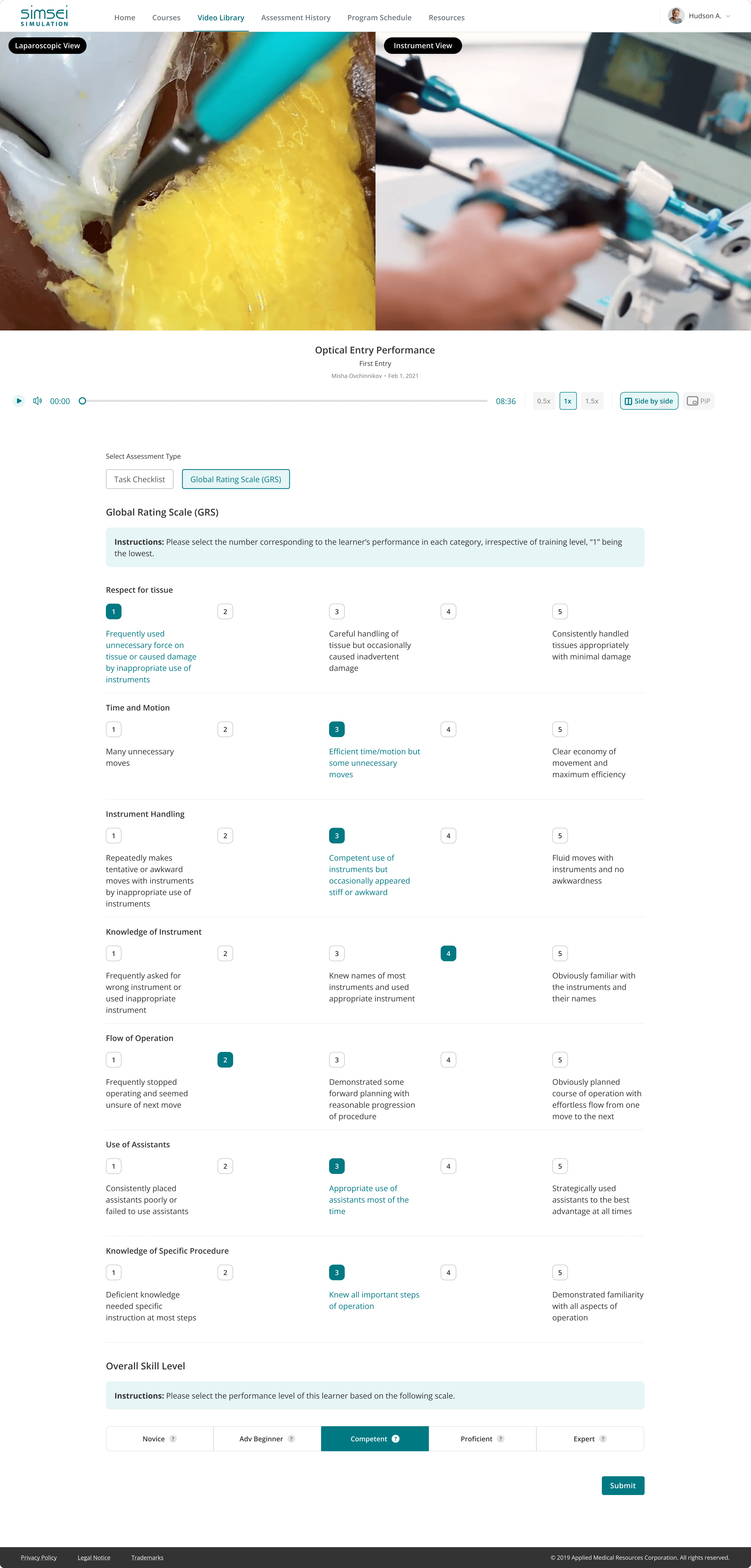
How will faculty complete assessment forms while watching the video simultaneously?

Will faculty be assigned to assess videos, or self-select?

How do we integrate the existing assessment rubrics into the video experience?

These weren't just UX questions, they were product, technical, and business questions all tangled together.

These weren't just UX questions, they were product, technical, and business questions all tangled together.

These weren't just UX questions, they were product, technical, and business questions all tangled together.

Feature Prioritization

Focusing on the Requirements

Before we could get started on the design, we needed to define a set of features and requirements to consider given the short timeline.


Before we could get started on the design, we needed to define a set of features and requirements to consider given the short timeline.


Before we could get started on the design, we needed to define a set of features and requirements to consider given the short timeline.


MVP

Record

Capture dual-camera video directly in the portal

Upload

Submit pre-recorded videos for faculty review

Access video in a library

Centralized library for residents and faculty

Dual videos (side-by-side)

Laparoscopic + instrument view in sync

NICE TO HAVE

Timestamp commenting

Faculty leave feedback at specific moments in the video

Integrated recording software

Built-in capture without third-party tools like Zoom

Playback speed control

Slow down or speed up footage during review

AI-based performance metrics

Long-term vision — heat maps and automated scoring


We focused the MVP on the core loop: record, upload, access, and review side-by-side. Nice to have features were deferred but designed with future implementation in mind.


We focused the MVP on the core loop: record, upload, access, and review side-by-side. Nice to have features were deferred but designed with future implementation in mind.


We focused the MVP on the core loop: record, upload, access, and review side-by-side. Nice to have features were deferred but designed with future implementation in mind.

Design Challenges

Making Complex Feel Simple

The video feature touched hardware, software, and information architecture simultaneously. Each domain surfaced its own hard problem, here are the 3 that shaped the design most.

The video feature touched hardware, software, and information architecture simultaneously. Each domain surfaced its own hard problem, here are the 3 that shaped the design most.

Where Does the Video Live in the Portal?

THE CHALLENGE

THE CHALLENGE

The natural instinct was to fold video into the existing Assessment History tab, but that would bury discoverability and conflate 2 distinct mental modals: a lookup tool vs an active workspace.

The natural instinct was to fold video into the existing Assessment History tab, but that would bury discoverability and conflate 2 distinct mental modals: a lookup tool vs an active workspace.

SOLUTION

SOLUTION

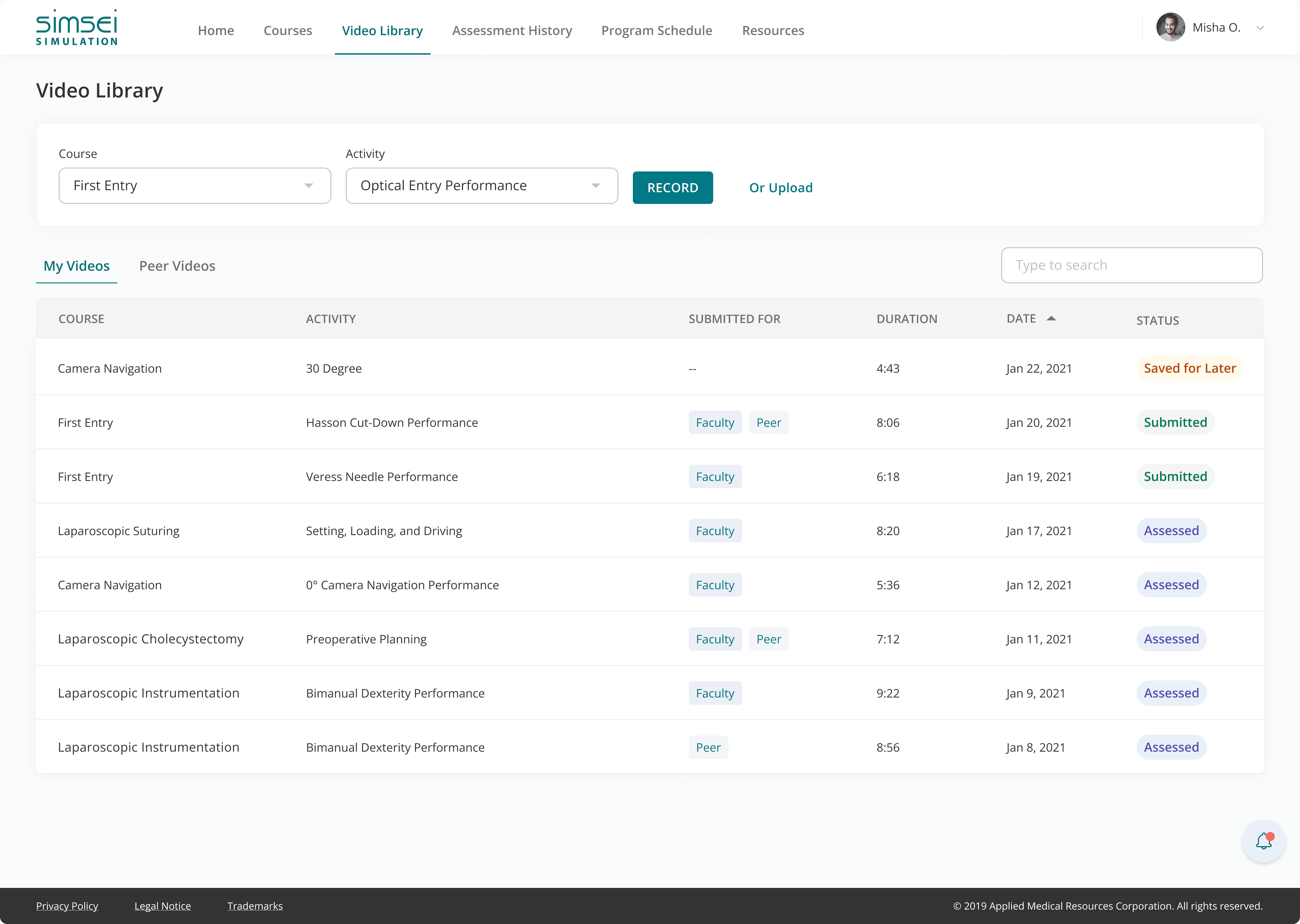
A dedicated Video Library tab, giving the feature its own home, positioning it as a first-class capability rather than an extension of something else.

A dedicated Video Library tab, giving the feature its own home, positioning it as a first-class capability rather than an extension of something else.

Recording Setup Flow

THE CHALLENGE

THE CHALLENGE

Residents had to connect the trainer via HDMI, turn on a webcam, position it correctly, and initiate recording — all from home, without a lab tech nearby. Every step had failure points.

Residents had to connect the trainer via HDMI, turn on a webcam, position it correctly, and initiate recording — all from home, without a lab tech nearby. Every step had failure points.

SOLUTION

SOLUTION

A guided setup flow with clear camera selection, live feed previews, and in-context instructions — making each step feel inevitable rather than technical.

A guided setup flow with clear camera selection, live feed previews, and in-context instructions — making each step feel inevitable rather than technical.

Dual Video Capture

THE CHALLENGE

THE CHALLENGE

Faculty needed to assess both the laparoscopic view inside the trainer and the resident's instrument handling simultaneously, the same two things they'd observe in person.

Faculty needed to assess both the laparoscopic view inside the trainer and the resident's instrument handling simultaneously, the same two things they'd observe in person.

SOLUTION

SOLUTION

Side-by-side dual-screen recording and playback with a single play button controlling both feeds in sync.

Side-by-side dual-screen recording and playback with a single play button controlling both feeds in sync.

The solution

A Closed Loop Between Resident and Reviewer

The video assessment feature was designed as a complete, end-to-end workflow — one that had to work seamlessly for two very different users with very different goals.

The video assessment feature was designed as a complete, end-to-end workflow — one that had to work seamlessly for two very different users with very different goals.

The video assessment feature was designed as a complete, end-to-end workflow — one that had to work seamlessly for two very different users with very different goals.

Resident User Flow

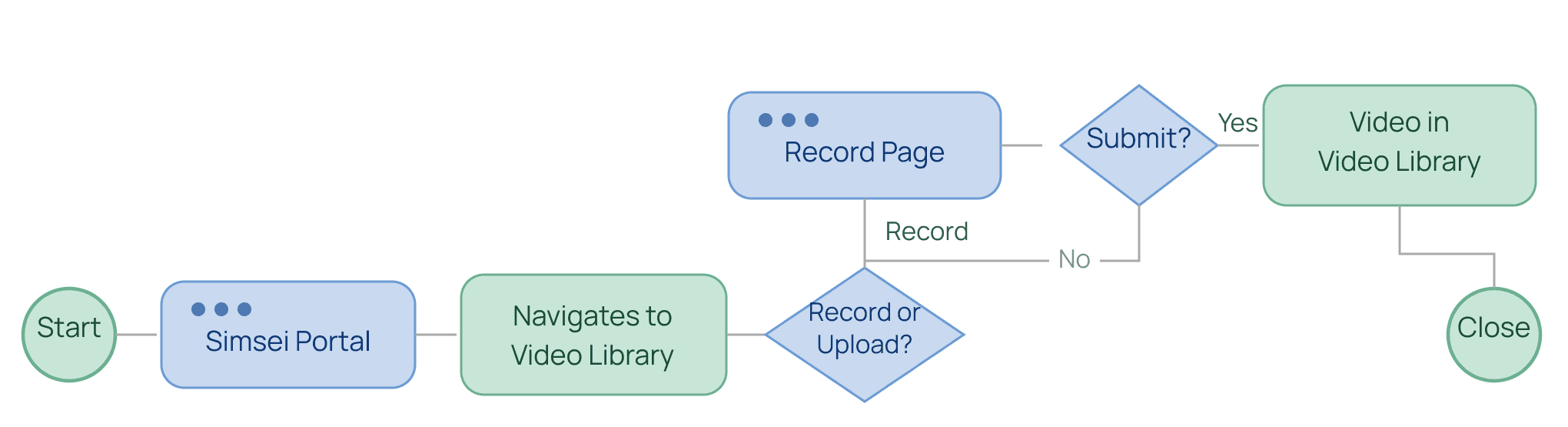
The resident experience is built around one core idea: practice on your own time, submit when you're ready. From selecting an activity to recording, reviewing, and submitting for assessment — every step was designed to feel guided, not technical.

The resident experience is built around one core idea: practice on your own time, submit when you're ready. From selecting an activity to recording, reviewing, and submitting for assessment — every step was designed to feel guided, not technical.

Faculty User Flow

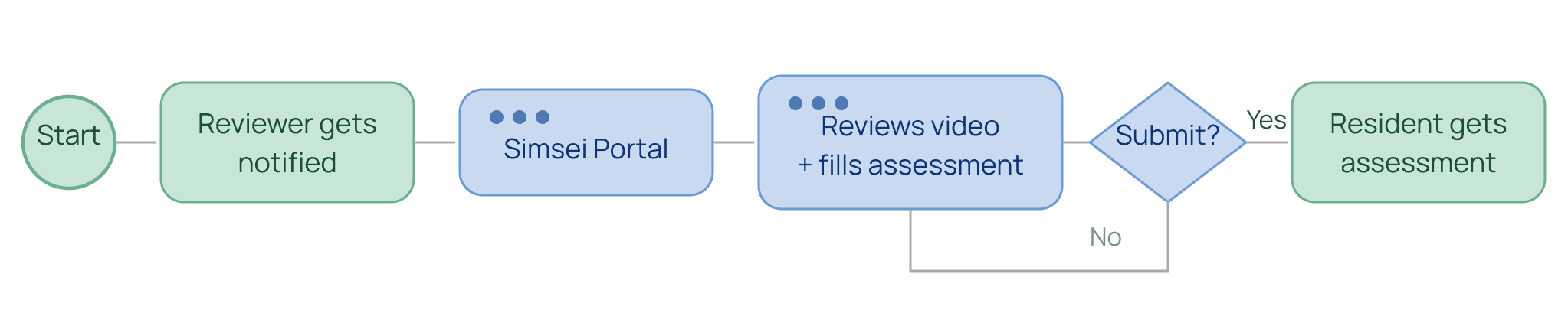
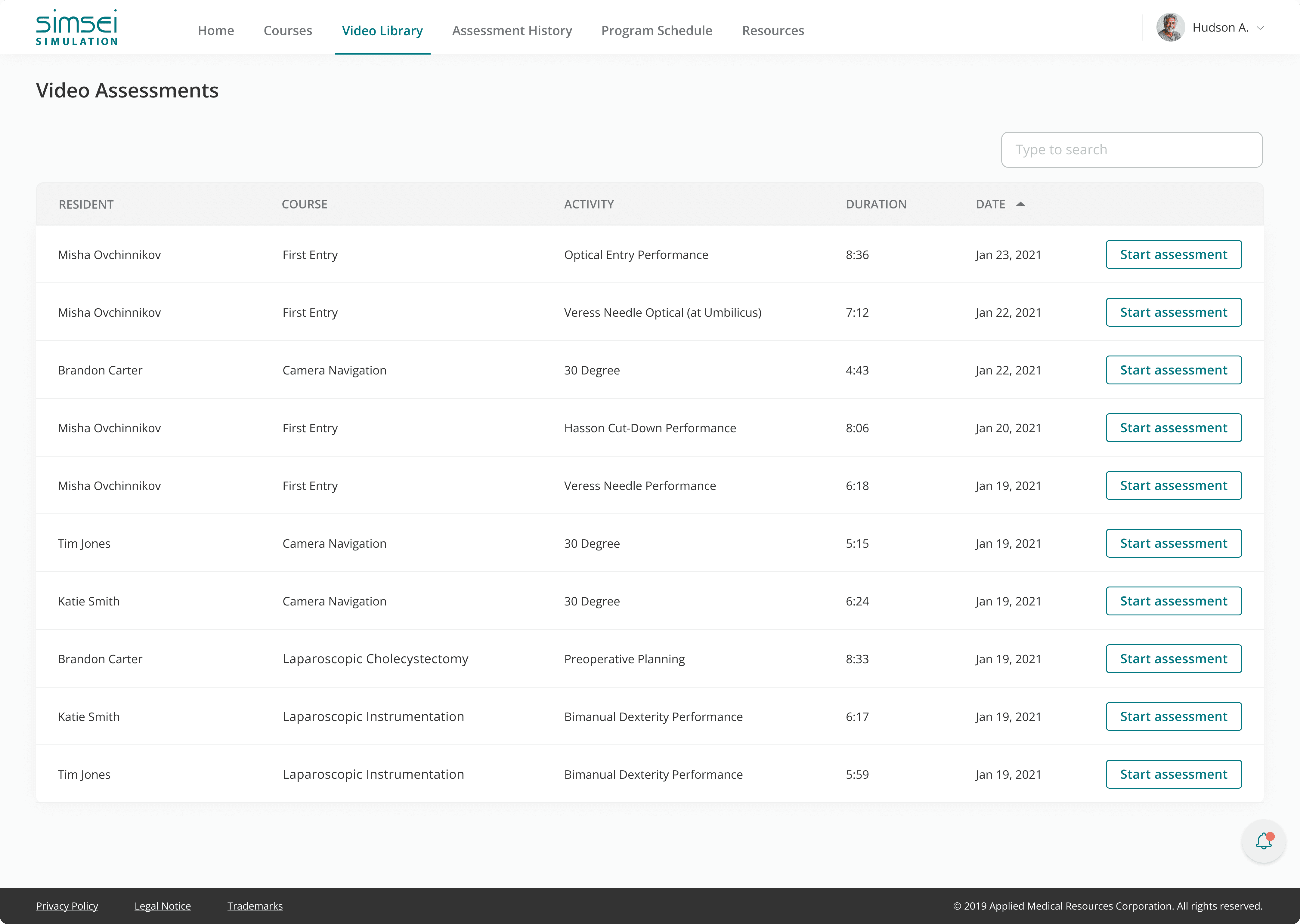
For faculty, the experience is built around their most limited resource: time. Videos queue up for review, assessments can be completed asynchronously, and the loop closes with a single submission, no scheduling required.

For faculty, the experience is built around their most limited resource: time. Videos queue up for review, assessments can be completed asynchronously, and the loop closes with a single submission, no scheduling required.

Impact

The feature shipped and became a core part of the Simsei platform. Today, Applied Medical describes the portal as "a platform for remote learning and evaluation via video assessment."

The feature shipped and became a core part of the Simsei platform. Today, Applied Medical describes the portal as "a platform for remote learning and evaluation via video assessment."

"This is a completely different class of education."

"This is a completely different class of education."

— Dr. Michael Thomas Jacklitsch

— Dr. Michael Thomas Jacklitsch

Reflections

What I Learned from this Project

Advocate for user access early

Designing through secondhand research meant I was always one step removed from the actual friction residents were experiencing. If I could go back, I'd push harder for even lightweight user touchpoints.

High stakes sharpen your instincts

Designing for high-stakes, low-error-tolerance users sharpened my instincts fast. Every extra step is a problem. Every ambiguous label is a failure point. The stakes in surgical education are real, and that made the design work feel real too.

Keeping the scope honest

We defined a clear MVP (record, upload, access, dual video) and held the line on it. That discipline let us ship something real instead of designing something perfect that never launched.